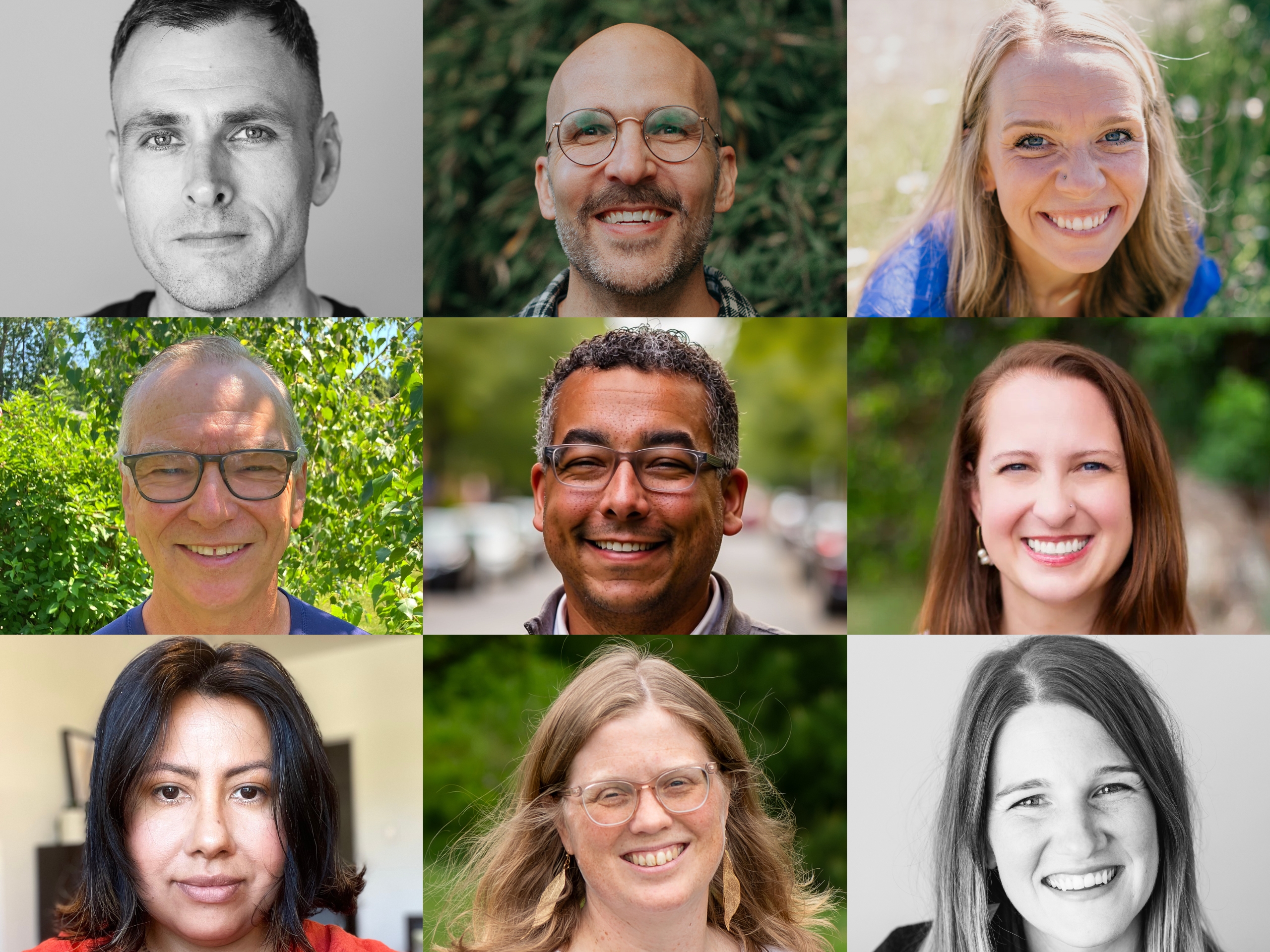
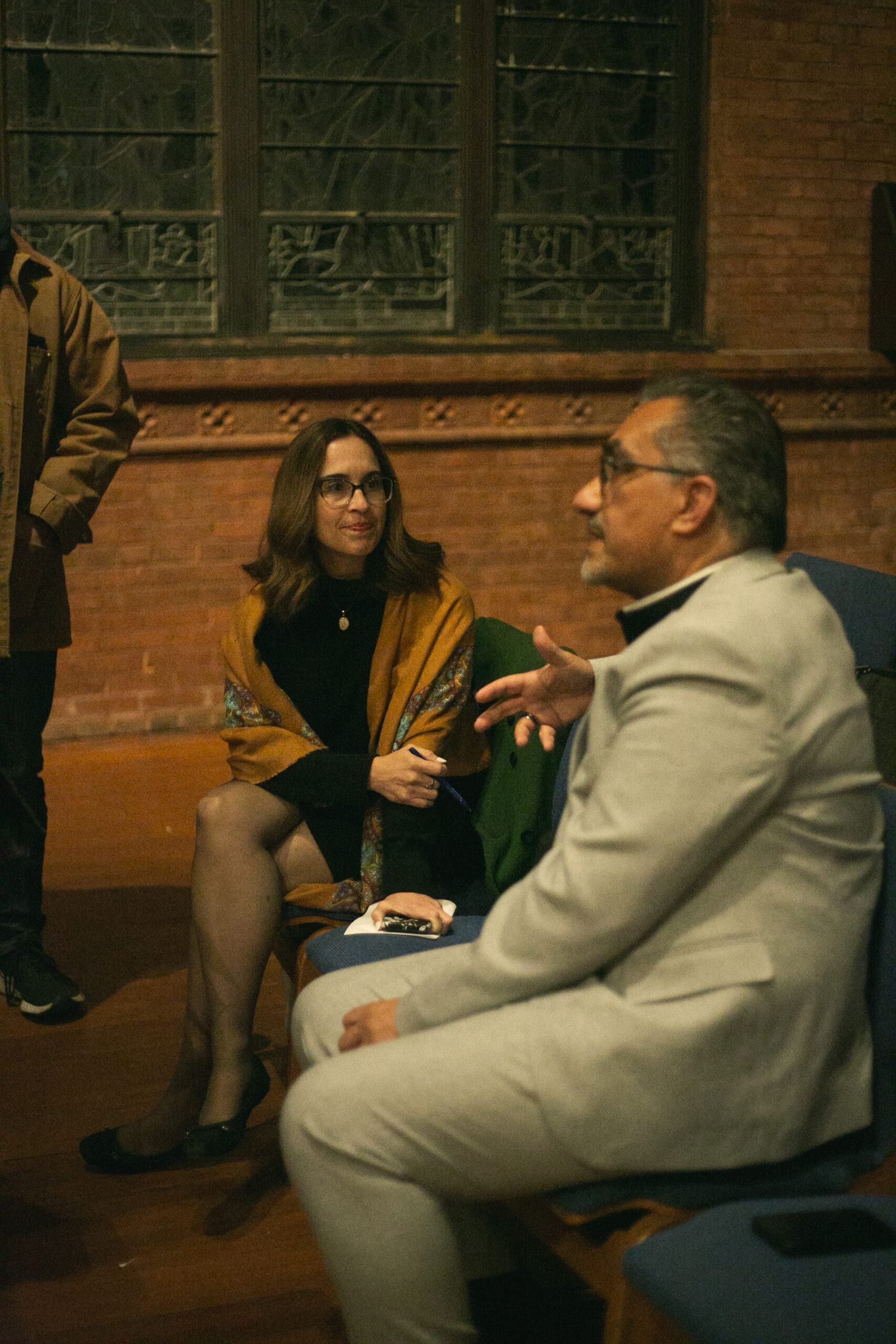
Just nine months ago, 13 pastors and church leaders from Portland to Philadelphia and many cities in between stared at a screen filled with faces they did not yet know. Now, they regularly exchange text messages filled with family photos, prayer requests, and words of support. Whenever we’re in person, they embrace each other with wide smiles, tight hugs, and personal and professional updates. In a relatively short period of time, this group has come to deeply value one another, recognizing that faithfully embodying their shared commitment to peacemaking requires precisely these kinds of relationships—friendships that make this work sustainable.
Over the last year, we witnessed the killings of Renee Good and Alex Pretti at the hands of ICE agents in Minneapolis in January. The US’s involvement in the Iran War erupted while on pilgrimage with our cohort in Derry, Northern Ireland in March. And a televised fighting match on the White House lawn to celebrate our nation’s 250th anniversary, as well as racially motivated destruction and violence in East Belfast, took place the same week we gathered for our annual Christian Leaders gathering in our nation’s capitol this June. In these moments and in many other ways we were reminded of our need for more committed, trained, and faithful embodied peacemakers who take seriously the “fierce urgency” of our moment.
Across monthly virtual seminars with scholars and practitioners on a variety of topics—including race and the gospel in North America, Ubuntu Theology, the history of the Israeli-Palestinian conflict, and Indigenous conceptions of belonging—and two separate peacemaking pilgrimages: through the US South as well as Ireland / Northern Ireland, we set about equipping congregations and their leaders to offer real Shalom to their neighbors. Here are some key learnings from our first year together.
Building Root Systems: The Critical Role of Peer-to-Peer Support Networks
One of the clearest learnings from our first year of the Mosaic cohort is how much our participants appreciate connecting with one another, across congregations, denominations, and geographies. What has brought such depths of meaning and connection in this work is not a shared denomination, political position, or other affiliation. It is a common commitment to embodying peacemaking as an outworking of discipleship.
In a research study published earlier this year, the Barna Group notes the critical social gap most North American pastors and church leaders are experiencing: just one in three of surveyed pastors have a trusted confidant outside of their congregation. In Barna’s study, participating pastors rate their relational well-being even lower than do churchgoers.
“This is a red flag for long-term sustainability in leadership,” Barna CEO David Kinnaman notes. “Friendship, vulnerability, and spiritual direction aren’t luxuries—they’re lifelines.”
Experiencing vulnerability in friendship is another way of describing what we refer to as authentic relationships. Authentic relationships are the Fourth Principle in Telos’ Principles and Practices of Peacemaking, forming a critical thread at the heart of peacemaking. What we’ve learned in Mosaic and beyond is that intentionally cultivating non-transactional relationships across lines of difference provides the necessary space for transformative learning. It creates opportunities for disturbance of longheld misunderstandings and critical “unknowing,” as well as the positive rebuilding of new ideas and more complex understandings. Working across differences in these ways nurtures empathy in ourselves and allows us to practice humility toward others. And, it emphasizes the humanity of those we are meeting and learning from who are different from us.
Like a web of underground roots that allow for the exchange of critical resources among trees, Mosaic offers participating pastors access to a robust network of other Christian leaders across the country and across denominations. These relationships are essential for their own wellbeing, for the fulfillment of their pastoral responsibilities, and for the flourishing of their congregation and their wider communities.
Recently, I had a call with one of our church leaders to discuss plans to introduce her learnings in Mosaic with her congregation in New York City. She shared her vision for a six-month course on peacemaking, culminating in a Telos-inspired pilgrimage through the church’s neighborhood. I was delighted to hear that she had just shared a call with another member of the cohort, a pastor in Philadelphia. “Who better to ask? She’s an expert on the theology of place.”
Be it in pastor cohorts and beyond, our work in peacemaking must be done in committed relationships across lines of difference, learning with and among those who can offer perspectives beyond our own. As we continue to offer learning cohorts to pastors who are united by a shared vision of peacemaking in their communities, deepening these relationships and expanding this pastoral leader network will be a key priority for the vitality of the Mosaic program into the future.
Embodying Peacemaking: Forming Christian Disciples in Context
Another key learning from our first year together is the essential role that embodied experiences play in peacemaking work. While virtual interactions continue to play an outsized role in our professional lives post-Covid, embodied, human interactions remain critical to our learnings and connections—including our commitment to peacemaking.
As we were reminded in numerous ways in our Mosaic cohort this past year, God’s message of peace draws near to us often in those places of profound need, conflict, and neglect. Meeting with leaders throughout the US South and in Ireland / Northern Ireland offered fresh reminders that this divine message of reconciliation must be put into embodied practice for it to become true Shalom—that is especially felt in local contexts that are longing for peace.
One of our early experiences in our first Mosaic Cohort was to go on pilgrimage together in the US South. Starting in New Orleans—the arrival site of so many enslaved people brought to our shores by the Transatlantic slave trade—our cohort was invited to participate in a series of embodied experiences of both celebration and grief. These experiences included communal music making in Congo Square, as well as walking through the tragic history of the Whitney Plantation, hearing stories of enslaved plantation workers’ experiences from a tour guide whose lineage goes back to the Whitney.
These shared, embodied experiences provided the necessary context to better understand the deep, grievous wounds at play in our national history and our ongoing legacies of injustice. These in-person experiences also provided the necessary space for meeting and hearing from everyday heroes who are committed to the work of peacemaking and reconciliation in their communities. While our cohort benefits from staying connected on regular Zoom calls, the robust peacemaking learnings and skill-building we seek cannot be replicated in a virtual setting.
In extended in-person times together, our cohort was able to dig deeper into our learnings, asking fundamental questions about how what we’re learning is rooted in a robust understanding of Christian discipleship. While traveling through Ireland and Northern Ireland, several members of our Mosaic cohort shared late night conversations around a table in a West Belfast pub, asking, What difference does following Jesus make for the work of peacemaking? How does following Jesus compel our work in peacemaking?
This commitment to peacemaking as discipleship has united our group, it has served as a central thread in our first year together, and it is directly contributing to our pastors’ translation of their experiences in Year 2, as they form disciples of Jesus as peacemakers in the distinct contexts to which they have been called.
Getting into Good Trouble: Peacemaking Is Not Always Welcome
We have also been reminded this year, collectively and individually, that a commitment to embodied peacemaking will not always be warmly welcomed. Such work is disruptive to present systems, it is inherently challenging, and it will often result in significant and sustained resistance.
A Christ-shaped commitment to embodied peacemaking requires serious consideration of its costly nature. Jesus’ embodied message of peace and reconciliation was often rejected, challenged, or threatened with violence. In contrast to the Pax Romana of his day, Jesus’ offer of peace promised to offer mutual and true peace to all—starting with the marginalized, the abused, and the forgotten. It was, however, received not with open arms and gratitude but as a threat to the status quo of the Empire, leading to Jesus’ crucifixion.
We were reminded of the occurrence of hostility in response to nonviolent commitments to peace during our time on pilgrimage in Selma, Alabama last fall. Marcus Myles, the former Director of Community Organizing and Restorative Justice at the Selma Center, led our group through a half-day training rooted in Kingian conceptions of non-violence, exploring both practical skills and detailed planning processes for those committed to this work. A few months after our time together, Marcus’ life was lost to violence. Our group mourned alongside Marcus’ community in Selma and beyond, reminded that this work asks something of all who commit themselves to it.
On retreat together this past June, one of our D.C. pastors’ presentations noted: “Some will actively try to sabotage the work [of peacemaking]. We stay rooted in a vision larger than the opposition. Not everyone will be happy with us—but we are accountable to something truer than their discomfort.”
Similarly, the late Civil Rights leader John Lewis offered a reminder of the ongoing experience of this active resistance:
“Our struggle is not the struggle of a day, a week, a month, or a year, it is the struggle of a lifetime. Never, ever be afraid to make some noise and get in good trouble, necessary trouble.”
For those stepping into the work of embodied peacemaking, we should not be surprised when we experience challenges. Indeed, pronounced and ongoing challenges have been true for leaders in our first cohort. Faithfully and responsibly navigating these challenges requires careful planning, ongoing discernment, open communication, and relying on a community that is committed to carrying out this work together. As is remembering that peacemaking is rooted not in our own best efforts or even our own hopes, but in our sustained and embodied response to God’s promised and unfolding beloved community.
Become Proximate: Peacemaking Begins with Knowing Our Neighbors
Our first Mosaic Cohort underscored the critical need to get to know our local contexts, in order to understand the depths of injustice and our responsibility for healing and mutual flourishing.
During our pilgrimage through the US South last fall, we visited the National Memorial For Peace and Justice in Montgomery, Alabama, an open-air exhibit where guests walk through more than 800 corten steel monuments, each representing a U.S. county where a total of more than 4,400 total Black people were killed in racial terror lynchings from 1877 to 1950.
Before boarding our bus to leave, one of our participating pastors noted the name of her home county on a steel memorial in the open-air exhibit. She returned home with a commitment to explore the history of racial terrorism, lynching, and other expresions of violence in her own context, and to invite her church into this work.
“I found multiple counties that I have lived in or have family/friends still in…. The ‘hit-home’ nearness of seeing these was convicting–I didn’t know the history of these places and I’d bet big money that people I know who live there now don’t either. This and EJI’s commitment to naming local history reaffirmed my conviction that place matters, and part of stewarding a place is to know it. I plan to explore more of DC’s history for myself and build that into the leadership structures of our church.”
Not merely noticing racial violence and injustice from afar—geographically or temporally—but taking seriously the contours of injustice in the place to which we’re called is all part of Equal Justice Initiative’s design for the Legacy Museum experience.
“We cannot create justice without getting close to places where injustices prevail,” EJI Founder Bryan Stevenson notes. “We have to get proximate.”
One of the first assignments given to our Mosaic Cohort was to complete our Peacemaking Audit. This audit aims to help participants better understand the local context God has called them to inhabit by identifying areas where they are experiencing division with their neighbors and identifying practices to help bridge these divides.
One congregation leader, from Redemption Church in Costa Mesa, California, shared that their community is largely divided into east and west, demarcated ethnically and socio-economically in ways that perpetuate separation. The waterfront and westside of Costa Mesa is home to a growing immigrant community, many working-class families, and higher rates of crime. The eastside is made up of more affluent neighborhoods, home to predominantly white families of economic influence. In a city where fear of difference perpetuates divisions, these communities experience little interaction with one another. In addition, the city faces a significant housing crisis, with one-third of the city’s residents qualifying as low-income households. Costa Mesa faces a pressing need for meaningful exchanges across these socio-economic and ethnic lines, offering cross-cultural community and belonging.
Inspired by the Four Corners Festival in Belfast, whose Catholic and Protestant leaders we met while on pilgrimage together in March, Redemption’s leadership is working on creating a monthly night market, festival, and dinner event that will help bridge this longstanding east-west divide in their community, which they’re calling “Westside Nights.”
Westside Nights is envisioned as a collaboration of churches, city leaders, ministries, and entrepreneurs in Costa Mesa who seek to empower its immigrant and low-income neighbors by offering a space where all people can buy, sell, and build relationships with others in the community with whom they might not normally interact. Being with the community and not merely for the community at a distance, Westside Nights promises to expand the community’s understanding of what it means to love our neighbors, and to see each person as an image bearer of God. In the year ahead, Redemption is encouraging their congregation’s members to take meaningful and practical steps to help lead in this healing work, including participating in Spanish classes to create even more opportunities for connection.
In these and other examples, we’re learning that peacemaking begins with taking an intentional assessment of one’s immediate context, as well as ongoing reflections on the complexities of our local socio-economic and cultural topography. Christ’s reconciling call to peacemaking requires not only patiently considering, Who is my neighbor?, but faithfully embodying Jesus’ call to be a neighbor.
Thanks for Your Critical Support & Ways to Get Involved
As we continue to learn, refine, and experiment with our Mosaic Cohort to ensure we’re best supporting this cohort of pastors and congregational leaders in the work of peacemaking, we must note our debt of gratitude for your support. The slow, patient, and relational nature of equipping and supporting our church leaders in peacemaking requires the generous support of a community who recognizes the critical role pastors and church leaders play in promoting justice, dignity, and mutual flourishing across the social fabric of our world, nation, and in our respective communities.
Thanks for your investment in this work, be it with a recommendation, hosting a training, sharing our programming with your church community, or financially supporting this work in a way that makes it sustainable for even more church leaders. Truly experiencing the reality of Beloved Community, as it has long been promised, is impossible without you.
We hope you will choose to get involved with the work of Mosaic in one of several ways:
- Nominate your congregational leaders for a future Mosaic cohort. Or share the Mosaic cohort opportunity with your pastor.
- Support the work of Mosaic to help make this cohort learning journey sustainable for the long-term.
- Join us at a future Mosaic event—online or in-person—to learn more about this work.