Are We Able to Listen Anymore?
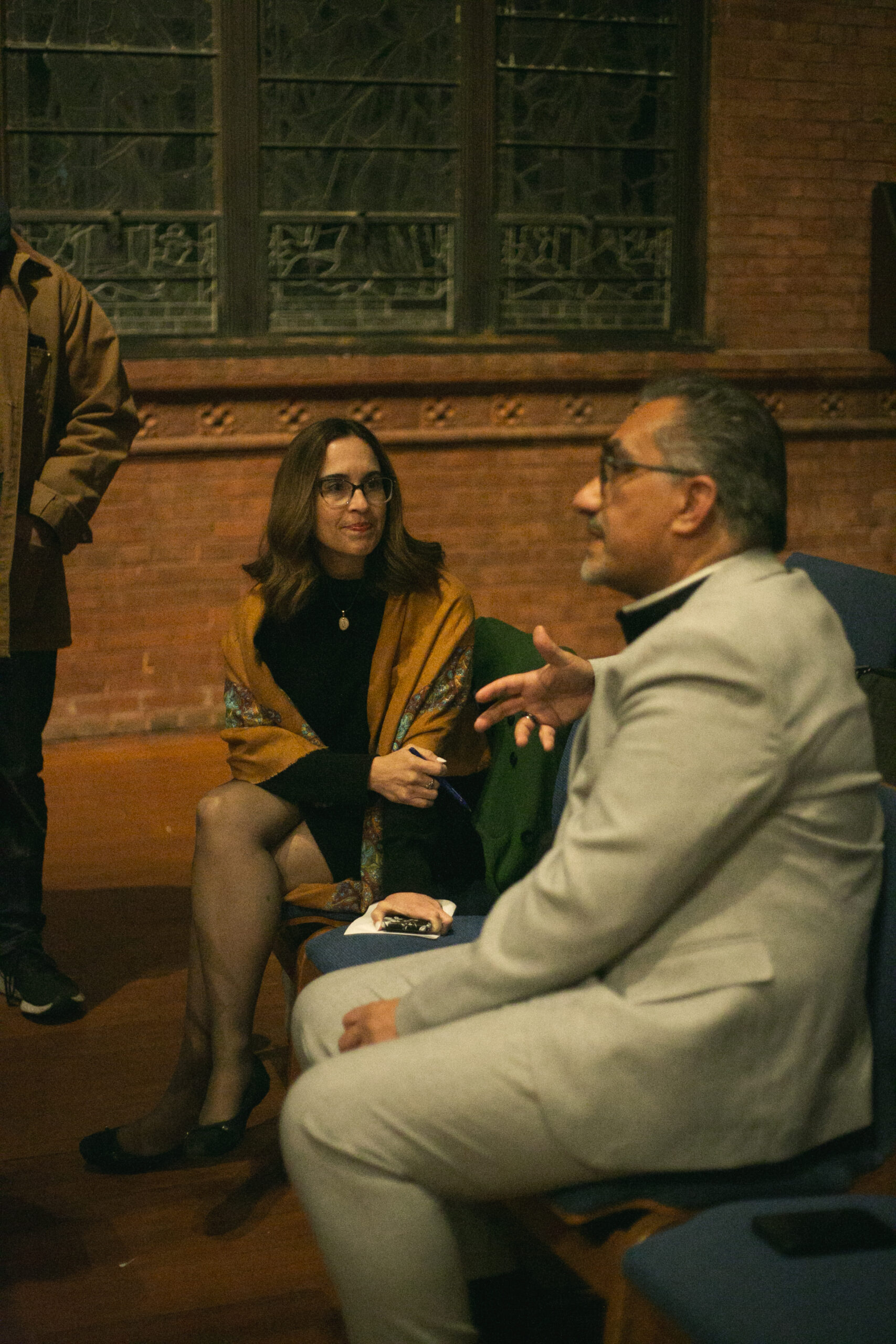
“What does love for your neighbor, love for your enemy really mean?” Savannah Guthrie asked Michael Rudzena, Good Shepherd NY Pastor and Telos alum, and author Arthur Brooks before a live studio audience at 30 Rockefeller Plaza at the end of September. Their interview was featured on NBC’s Common Ground series, exploring the question of what unites us as Americans, and noted Telos’ work of traveling to conflict zones and encouraging Americans to be peacemakers around the world.
With attentive consideration of the gospel stories, Michael Rudzena offered Jesus as a model of the kind of vulnerable relationships that make love of neighbor, and even love of our enemy, possible.
“His first step was to be involved,” Michael said. “He let someone else’s pain reach his heart, and that led to action… [But] relationship is first.”
“One of the growth opportunities in a country that’s so divided and polarized is to learn how to see our neighbor. You don’t love unless your heart breaks for something. And it’s hard to love someone for whom your heart doesn’t break.”
Michael went on to suggest that listening with curiosity and intentionality can help us get to the real, underlying concerns that hold the possibility for connection rather than just division.
“What is more interesting than, ‘What do you believe?’ is, ‘What’s the story behind that? Tell me the story of how you came to believe that?’ That’s where the vulnerability is, that’s where the human drama is. That’s where what’s in me that wants to connect with you comes alive.”
“Beginning with curiosity and centering human story is really important, and that’s what Jesus did.”
This kind of listening, as Michael shares, is best practiced in places of seemingly intractable conflict: Israel/Palestine, Northern Ireland, the US South, places where “[such listening] costs something.”
These are the sites of conflict where so many pastors and Christian leaders in Telos’ network have found themselves disrupted in important ways, connected to helpful guides, and equipped to lead their congregations and communities in the work of peacemaking—as we’re exploring together in our Mosaic pastors cohorts.
Listening to Understand: Racial Equity, Immigration, & the Next Generation
This past summer, our first Mosaic cohort participated in a series of virtual conversations titled “Listening to Understand: Local Contexts.” Telos’ partners David Bailey of Arrabon, Sami DiPasquale of Abara, and Rev. Sandra Marie Van Opstal of Chasing Justice led practical conversations infused with rich wisdom on listening to understand racial inequity, immigration, and the next generation, respectively.
These are some of the critical areas and populations we hope Christian leaders in our network are paying special attention to—recognizable within the particularities of their communities. When we take the time to truly listen to understand, these areas of concern become three-dimensional lives of people we begin to know, allowing us to offer a more faithful response.
If Jesus’ call to love our neighbors as ourselves is to be embodied in our particularly noisy, distracted moment, it must involve our commitment and discipline to listen to our neighbors as they actually are, not as we imagine them to be.
In his landmark book, Jesus and the Disinherited, the late Howard Thurman writes: “In any great struggle between groups in which the major control of the situation is on one side, the ethical question tends to become merely academic.”
Our goal in listening to understand is to reveal the full humanity and the inherent dignity of those whose lives are often reduced to abstractions, as well as the vital, mutual community into which God is inviting us all.
Jubilee Journeys: Equipping Youth to Listen to their Neighbors
Over the summer, we were delighted to learn the good news that Pastor Adam Bowles of Castle Church in Connecticut, a past participant in Telos’ one-year pastors peacemaking cohort, celebrated his first Jubilee Journeys cohort. The grant-funded program provides a robust local peacemaking pilgrimage experience for 10 youth fellows.
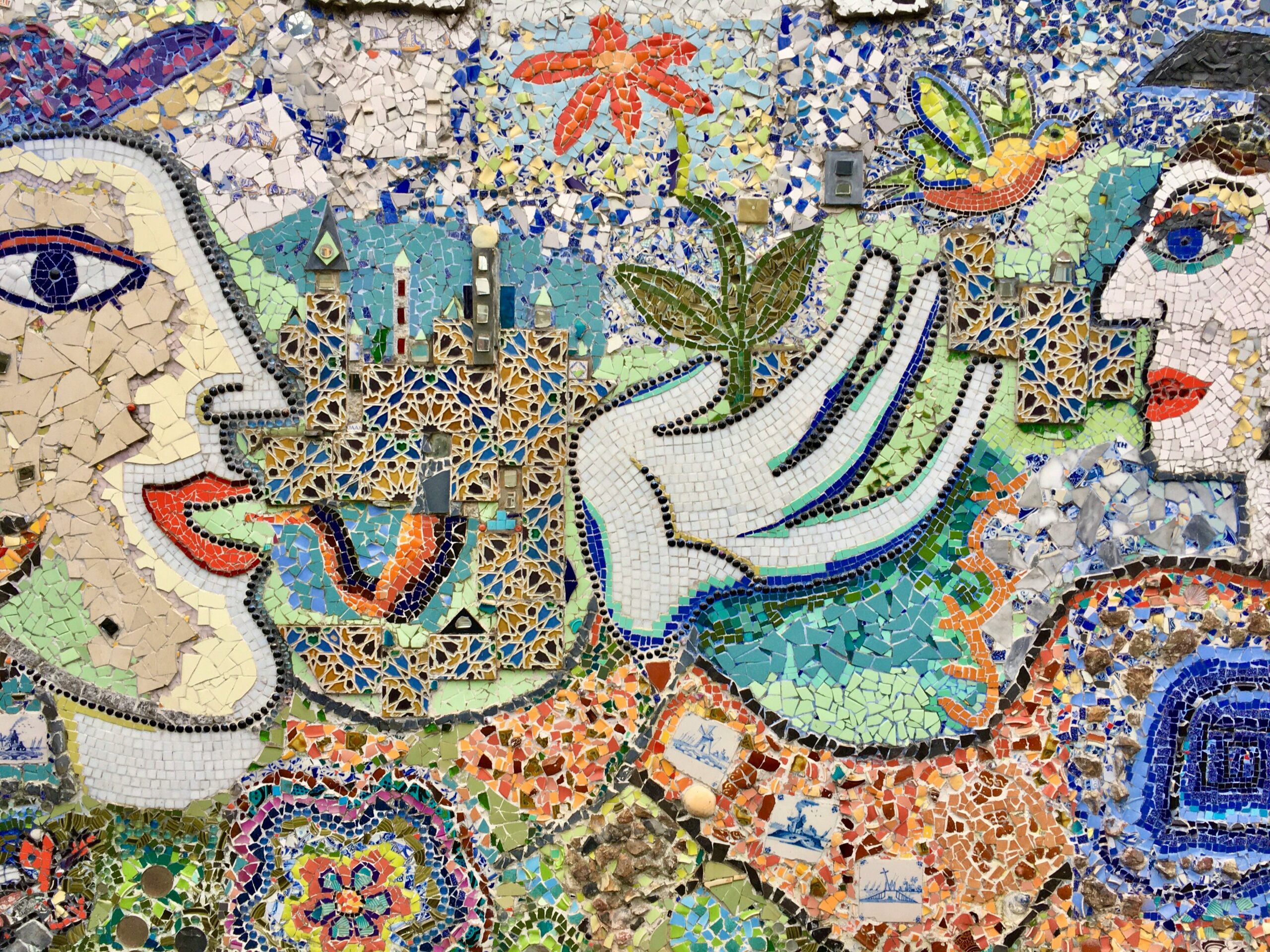
“We incorporated Telos principles and practices of peacemaking, shared meals, and shared travel as we met with local Native American leaders, heard from NAACP speakers, and showed our own mini-documentaries regarding migrant pathways and our own Jubilee Mural,” Adam shared.
“It was such a moving experience. We applied for a grant that would expand the program to 30 youth participants each year for three years.”
One week ago, Adam wrote to share that the grant had come through for Jubilee Journeys at the highest level of state funding. Castle Church now has funding to equip 30 members of the next generation of peacemakers each year over the next three years to listen and learn from the stories of their Native American neighbors, NAACP leaders, and migrant experiences. Alongside Adam and Castle Church, we’re proud to celebrate this expanded investment in a growing community of peacemakers who listen to understand their neighbors.
Listening to Understand Local Immigration Stories
On a Saturday afternoon in September, my new friend Eunice invited me to attend an immigration story sharing event hosted by Urban Impact here in Seattle. When I arrived at the lakeside luncheon with my family, we were greeted by about 20 people already seated in a circle of plastic chairs.
We were told that many of those in the group had grown afraid of leaving their homes, for fear that they might not return. Surrounded by a group of pastors and local leaders, one man shared his experience of enjoying a meal with a friend when ICE entered and removed his lunch partner from the restaurant. They later returned, he recounted, and removed the chef, leaving our neighbor all by himself.
“I still don’t know why they left me,” he shared with the group.
Another man stood, gathered himself, and shared with the group that after living in the United States for the past twenty years, he has been court ordered to appear before a judge in Miami in early October. After flying across the country, he will be asked to present his case on why he feels it necessary to remain in this country, and what impact it would have on his family if he were to be deported.
While he shared, his wife blotted her eyes with a tissue. His teenage daughter’s hands shook in her lap.
“I know the God of the Bible loves the immigrant,” he told the group of pastors and neighbors seated on the banks of the lake. “And I know God will be with me, whatever happens.”
As the group circled the man and his family, laying our hands on shoulders and taking turns praying over them, his wife spoke up.
“I want to say something,” she said. “Thank you, God, for these people and for their support of us. Would You please care for them and take care of them, financially, physically, and spiritually.”
As I listened to this woman’s prayer, a tear ran down my cheek and landed on my son’s face. I watched him wipe it with the back of his hand as the group said together, “Amen.”
Story-Formed Peacemakers
As we grow in our ability to truly listen to our neighbors with understanding, we simultaneously grow in our ability to work together to create the local peacemaking initiatives and programs that provide a faithful response to our local community members.
Wherever this newsletter finds you, in whatever intersection of divisions and wounds, victories and celebrations, may the stories in your own local community be stories that you are able to draw near and hear. May we resist the speed and distraction of our days, so that we can truly listen to the stories that surround us, revealing the lived realities of our neighbors in all their dimensions.
As we listen across would-be borders and divisions, may our neighbors move from causes to people—with all their complexity and nuance—and from people to friends with whom we share prayers.
And may the Holy Spirit continue to work through our experience of these stories to form us into the visible and recognizable body of our Lord Jesus—into lives that disrupt injustice in all forms, build relationships of mutuality, and become recognizable communities of true Shalom, for all.
Photo: Nick Fewings via Unsplash