“God has…now revealed a mighty hand and an outstretched arm reaching deeply into the lives of the Son’s co-travelers and pressing them along a new road into the places God seeks to be fully known.”
–Willie James Jennings, Acts: A Theological Commentary
John Paul Lederach tells a story of Abdul Rahman, a Tajik mediator, who was asked by his own government to broker a negotiation with “a notorious criminal warlord.” Though he had reservations, Abdul conceded. He began what became a years-long relationship with the man.
After several years, Abdul finally mustered the courage to make his request: Will you put down your weapons?
The warlord, in turn, had his own question: “If I put down my weapons…can you guarantee my safety and my life?”
This was the one promise Abdul could not make. But there was a commitment he could.
“I cannot guarantee your safety,” Abdul recounted to John Paul Lederach, swinging his arm under Lederach’s arm, and pulling himself alongside him as he said his next line: “I can guarantee that I will go with you, side by side. And if you die, I will die.”
This offer, rooted in relationship, set something free that had been stuck. Abdul’s promise of solidarity empowered this warlord to lay down his arms, and it allowed for a peace agreement to be arranged.
Years later, the peace still stood.
These aren’t the kind of stories that often make headlines, but they bear witness to the transformative nature of relationships built on mutuality and solidarity—relationships that transform landscapes, lineages, and the future for more peaceful realities.
This story from John Paul Lederach’s Moral Imagination has echoed in my mind in the weeks since Pentecost.
Pentecost is marked by the outpouring of the Holy Spirit: the Advocate, the Paraklete—literally, ”the called alongside One.” Our Helper, Guide, and Counselor, the Holy Spirit comes alongside the body of fearful believers, bringing them into alignment with the heart of the Father, and sending them out in the way of their resurrected Lord.
Pentecost is inaugurated by the Holy Spirit’s surprising, disruptive outpouring on those united by a common fear in the early days following Jesus’ crucifixion, resurrection, and ascension. Amidst their overwhelming fears, the Holy Spirit appears, offering common understanding where language created division. While they were no strangers to division and fear, the early Christians allowed themselves to be led by the Holy Spirit’s movement in their midst. This Holy Spirit is no respecter of would-be boundaries to belonging. As Jesus consistently led disciples to surprising people and places, in Pentecost, the Church is reminded that the Holy Spirit often leads to places and relationships we would rather avoid.
“The Acts of the Apostles is about…a God whose weapon of choice is the divine desire placed in us by the Spirit,” theologian Willie James Jennings writes in his commentary on the Book of Acts. “That desire has the power to press through centuries of animosity and hatred and beckon people to want one another and envision lives woven together.”
Joining in the divine movement of the Holy Spirit by advocating with those we would not naturally associate—is not this the gospel work of peacemaking? Perhaps ours is a moment to reconsider the Advocate’s leading amidst our compelling fears and growing divisions.
Next week we will gather in D.C. with a core group of pastors and Christian leaders to reconnect and to engage the topic of advocacy together. Borrowing a phrase from the Rev. Dr. Martin Luther King Jr.’s 1963 March on Washington Speech, “The Fierce Urgency of Now: An Advocacy Gathering” will be a time to connect across denominational boundaries and geographical divides, to learn from one another about the urgent needs of this moment, and how our Christian faith and advocacy mutually inform embodied peacemaking in our respective communities.
As we like to say in our Principles and Practices of Peacemaking, advocacy brings our internal values and our outward actions into alignment. Not so unlike the Holy Spirit’s movement among us, advocacy is understood as a relational outworking of internal growth:
As we grow internally, we learn to lovingly challenge our families, friends, communities, and institutions to address systemic injustice and work towards mutual flourishing. We amplify voices of companions, steward our limited resources, and exercise our sacred political rights in ways that transform conflict and promote just peace. Together, our actions weave the fabric of Beloved Community.
Whether you plan to join us in D.C. in person or not, I invite you to consider your own relationships and opportunities for advocacy in the particularities of your local context. Where are those relationships in your congregation, in your community, perhaps even in your family where God is calling you to accompaniment?
Returning to Jennings’ reflections on the early Church’s encounter with the Holy Spirit, this work is undertaken not as our grasp at control, but as our attempt to move in alignment with the Spirit’s movement among us:
“This is God touching, taking hold of tongue and voice, mind, heart, and body. This is a joining. Those gathered in prayer asked for power. They may have asked for the Holy Spirit to come, but they did not ask for this. This is real grace, untamed grace. It is the grace that replaces our fantasies of power over people with God’s fantasy for desire for people…God has…now revealed a mighty hand and an outstretched arm reaching deeply into the lives of the Son’s co-travelers and pressing them along a new road into the places God seeks to be fully known”
As we enter into the comforts of summer and look ahead to our respective programming plans for the fall, may our prayers keep returning us to this question: Where is God calling us into relationships of advocacy and deeper Shalom? What might it cost us if we were to come alongside and lock arms together, recognizing that our future is bound up together, pursuing peace and reconciliation precisely in the people and places we would rather avoid?
What kind of a future might such relationships of advocacy open up for us all?
Ways to Engage:
- Are you in D.C. and interested in supporting Telos’ work? We’d love your help volunteering at our gathering, Wednesday, June 10 to Friday, June 12. Let us know if you’re able to help!
- Mosaic Cohort 2 interviews are currently underway! Know someone you’d like to recommend? Share the Mosaic program with them.
Resources for Peacemakers:
- Lament in Eastertide: The Gift of Telling the Truth in Our Communities—reflection on a recent pilgrimage to former Japanese American internment camps in Washington State.
- “What I Witnessed in Palestine Made Me Think About My Gun,” Josiah Daniels reflects on the disruptive impact of his 2024 and 2025 trips to Palestine with Sabeel for Sojourners.
- “Bryan Stevenson says facing our racist past is a path, not punishment,” on NPR’s Fresh Air—don’t miss the last 10 minutes of this conversation, in which Stevenson talks about the church’s role in truth telling in our pursuit of redemption and reconciliation.
- “Peace Comes Dropping Slow: Stories from Northern Ireland,” a Psalm talk by Rev. Dr. Karen Campbell, for Calvin Institute of Christian Worship.
A Prayer for Peace Justice & Peace:
Loving God,
send the gift of your Spirit
to fill this place
and ourselves
and the world.
Touch us
with truth
that burns like fire,
with beauty
that moves us like the wind;
and set us free,
free to try new ways of living;
free to forgive ourselves and others;
free to love and laugh and sing;
free to lay aside our burden of security;
free to join the battle for justice and peace;
free to see and listen and wonder again;
at the gracious mystery of things and persons;
free to be,
to give,
to receive,
to rejoice as children of your Spirit.
And,
teach us how to dance,
to turn around
and come down where we want to be,
in the arms and heart of your people
and in you,
that we may praise and enjoy you forever.
–Ted Loder, Guerillas of Grace (adapted)
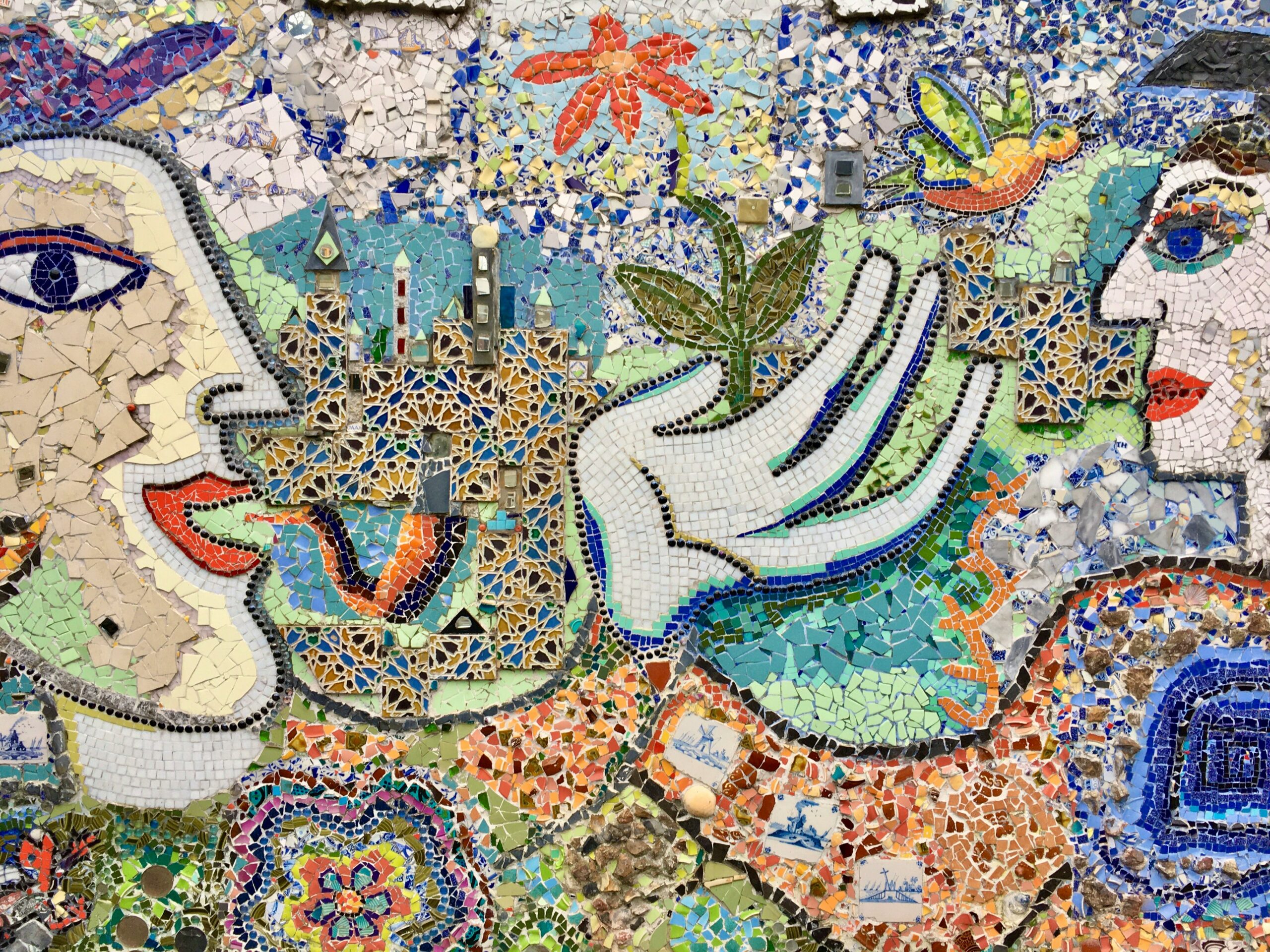
Photo: Serge Taeymans via Unsplash